

Tuxedo or suit: differences, usage & tailoring advice
Tuxedo or suit: what are the differences and when to wear which?
Tuxedos and suits are often confused, even though they follow very different dress codes. While a men's suit is versatile and suitable for many situations, a tuxedo is highly formal attire, reserved for specific contexts.
Cut, materials, accessories, time of day, level of formality: the differences between a tuxedo and a suit are not just aesthetic. They determine when, how, and why to wear one rather than the other.
In this guide, we explain in detail:
- What really distinguishes a tuxedo from a suit,
- In which situations to choose one or the other,
- And how to avoid the most common dress code mistakes.
What is the difference between a tuxedo and a suit?

The suit: versatility and mastered elegance
The men's suit consists of a matching jacket and trousers (2-piece), sometimes complemented by a waistcoat (3-piece). It forms the foundation of a formal and semi-formal men's wardrobe.
Its main characteristics:
- great variety of cuts (regular, slim, double-breasted),
- wide choice of materials (wool, flannel),
- multiple colors (blue, gray, black...),
- adaptability to numerous occasions.
The suit can be worn to work, at a wedding, a professional event, or a ceremony, depending on its cut and accessories.
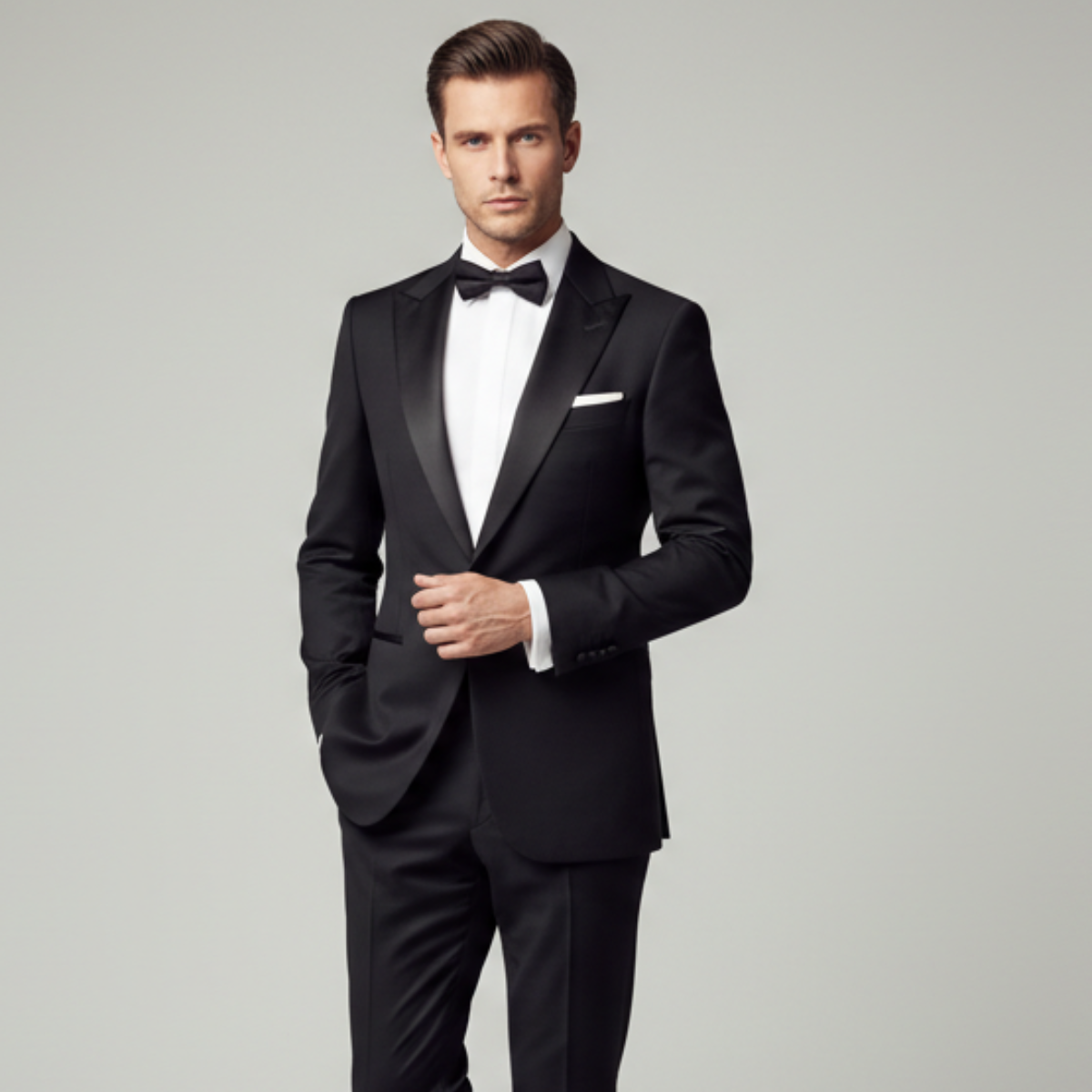
The tuxedo: a codified and ceremonial outfit
The tuxedo is a formal outfit derived from the black tie dress code. It is distinguished by very specific elements:
- satin or silk lapels,
- trousers without cuffs with a side braid,
- bib-front shirt,
- mandatory bow tie.
The tuxedo is neither versatile nor interchangeable with a classic suit. It is designed for formal evening events.
Wearing a tuxedo outside of its appropriate context may be perceived as a lapse in taste.
Origin of the tuxedo and "black tie" dress code rules
The tuxedo originated in the British aristocracy of the 19th century. Initially worn during private soirées, it quickly became the standard attire for formal evening events.
The black tie dress code requires:
- a black or midnight blue tuxedo,
- a white dress shirt with a wing or classic collar,
- a black bow tie,
- patent leather or very formal shoes.
The tuxedo is reserved for evening events, generally after 6 p.m.
Tuxedo or suit: when to wear what?

For a wedding: suit or tuxedo?
Everything depends on the level of formality and the time of the ceremony.
- Daytime wedding: Suit recommended (2 or 3 pieces depending on your role).
- Very formal evening wedding: Tuxedo possible, if the dress code explicitly requires it.
For the groom:
- 3-piece suit or double-breasted suit for refined elegance,
- tuxedo only for a black-tie ceremony.

For a professional or official event
- Professional reception, official dinner, gala: Elegant suit or double-breasted suit.
- Prestigious evening, awards ceremony, opera: Tuxedo if the dress code requires it.

For a formal evening or social event
- Formal evening with no specific dress code: Well-accessorized dark suit.
- Invitation mentioning "black tie": Tuxedo mandatory.
COMPARATIVE TABLE: TUXEDO VS SUIT
| Criterion | Suit | Smoking |
|---|---|---|
| Formality level | Formal to semi-formal | Very formal |
| Time of day | Day & night | Evening only |
| Versatility | High | Very low |
| Accessories | Tie or bowtie | Black tie required |
| Subjects | Wool, flannel | Wool + satin |
| Occasions | Work, wedding, event | Gala, black-tie ceremony |
Mistakes to avoid between a tuxedo and a suit
- Wearing a tuxedo during the day
- Wearing a tie with a tuxedo
- Confusing a black suit with a tuxedo
- Underestimating the importance of accessories
- Choosing an ill-fitting cut
In any case, the fit remains essential, regardless of the outfit.
Tuxedo or suit: which one to choose for your needs?
If you are looking for:
- a versatile garment → suit
- a strictly ceremonial outfit → tuxedo
- enduring and adaptable elegance → well-tailored suit
an exceptional outfit for a specific event → tuxedo
FAQ: Tuxedo and suit
The tuxedo is a very formal outfit reserved for black-tie events, whereas the suit is versatile and suitable for many occasions.
Yes, only if the ceremony is very formal and takes place in the evening with a black tie dress code.
No. Without satin lapels or specific accessories, a black suit remains just a suit.