
What suit should I wear in winter?
Wearing a suit in winter requires finding the right balance between elegance, comfort, and protection against the cold. Unlike during milder seasons, the choice of suit does not rely solely on the cut or color: the material, fabric thickness, and layering of pieces become essential.
Whether for work, a formal event, or a ceremony, a well-chosen winter suit must offer effective thermal insulation while maintaining an impeccable drape and a structured silhouette.
In this guide, we explain how to choose the right men's suit for winter, based on materials, colors, uses, and accessories.
Why adapt your suit for the winter season?
In winter, lower temperatures and humidity change the conditions for wearing a suit. Fabric that is too light or poorly suited can quickly become uncomfortable and lose its shape.
A winter suit must allow you to:
- retain heat without adding bulk to the silhouette,
- ensure good thermal comfort both indoors and outdoors,
- maintain an elegant structure despite the additional layers.
Unlike a summer suit, we prioritize the material and the density of the fabric here, even before the color.
Which materials should you choose for a winter suit?
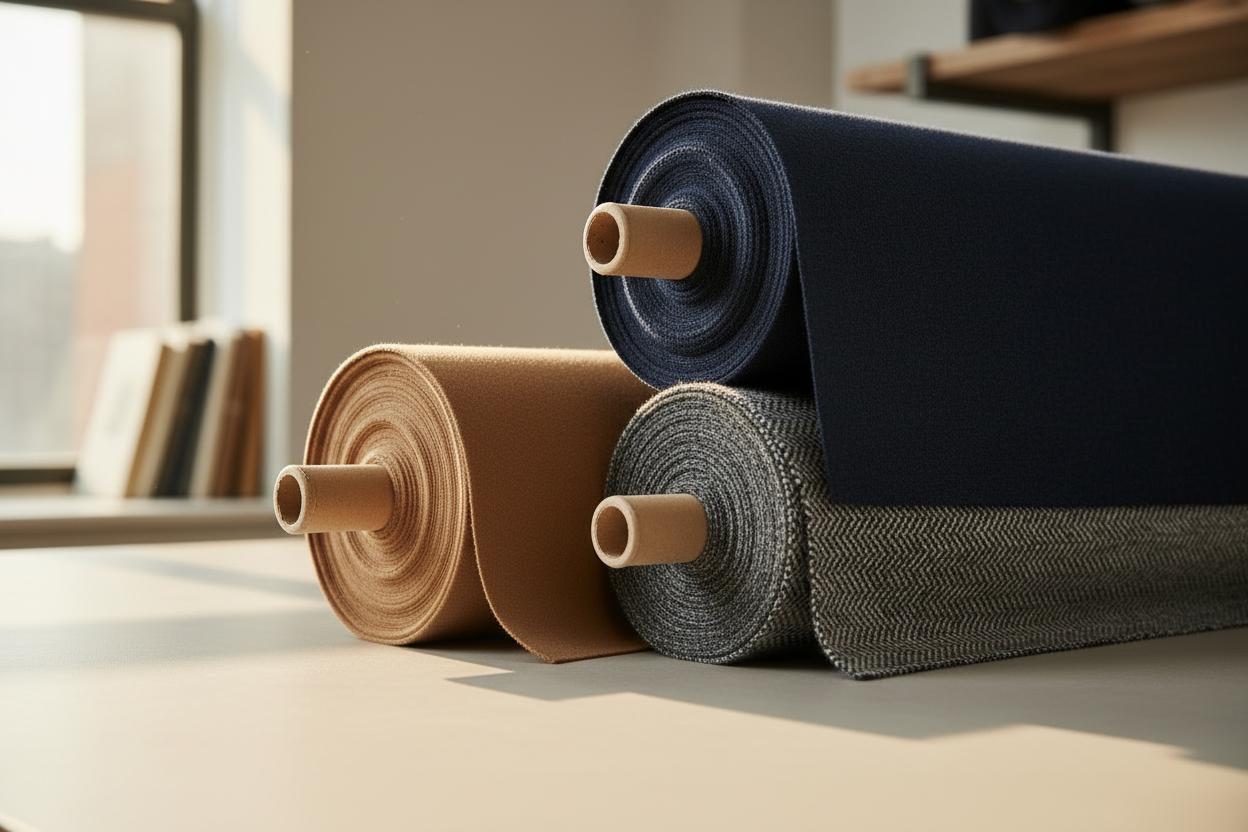
Wool: the essential benchmark
Wool is the most suitable material for a winter suit. It offers an excellent compromise between warmth, breathability, and elegance.
Quality wool retains heat while preventing overheating indoors. It also ensures a crisp drape, which is essential for a structured silhouette.
OUR WOOL SUITS
Flannel: warmth and sophistication
Flannel, made from wool, is distinguished by its slightly downy feel and matte appearance. It is particularly appreciated in winter for its thermal comfort and elegant finish.
It also brings a more textured dimension to the suit, ideal for more assertive winter looks.
OUR FLANNEL SUITS
Fabric blends: comfort and technical performance
Some suits combine wool with other fibers such as silk or technical fibers like polyester or elastane. These blends make it possible to obtain fabrics that are more flexible, shinier, or more resistant, while maintaining good insulation.
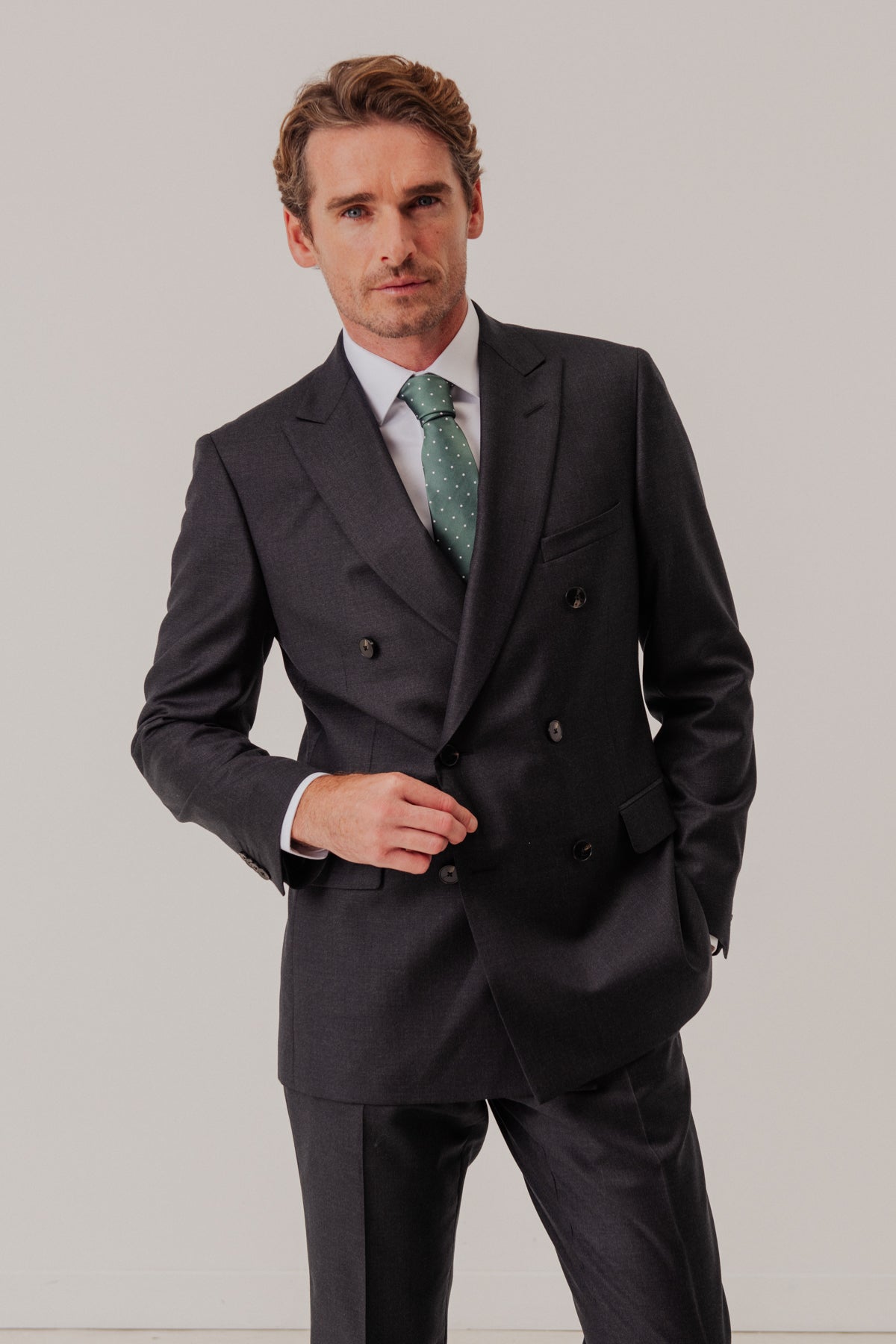

Which colors to wear in winter?
In winter, colors play an important role in one's overall look. Deeper shades are naturally preferred.
Navy blue remains a safe bet, being both elegant and versatile. Charcoal gray is particularly well-suited for professional environments and formal occasions. Textures, such as gray flannels, also add depth to an outfit.
Conversely, colors that are too light or too summery can feel out of place with the season.
Which suit cut should you choose for winter?
In winter, the cut should allow for layering without compromising comfort.
A slightly slim or straight cut is often ideal, as it leaves enough room to wear a thicker shirt or a waistcoat.
The 3-piece suit is particularly well-suited to the season. The waistcoat provides an extra layer of warmth while enhancing the elegance of the outfit.
How to wear a suit in winter without getting cold?
Wearing a suit in winter is not just about the choice of fabric. The entire outfit must be designed to withstand low temperatures.
A waistcoat is an excellent solution for enhancing insulation without adding bulk to your silhouette. It also allows you to maintain an elegant look even without a coat.
The choice of coat is also decisive. An overcoat or a pea coat pairs perfectly with a suit, unlike more casual pieces like puffer jackets.
Finally, accessories play an essential role: a wool scarf, leather gloves, and suitable shoes complete the outfit while providing comfort.
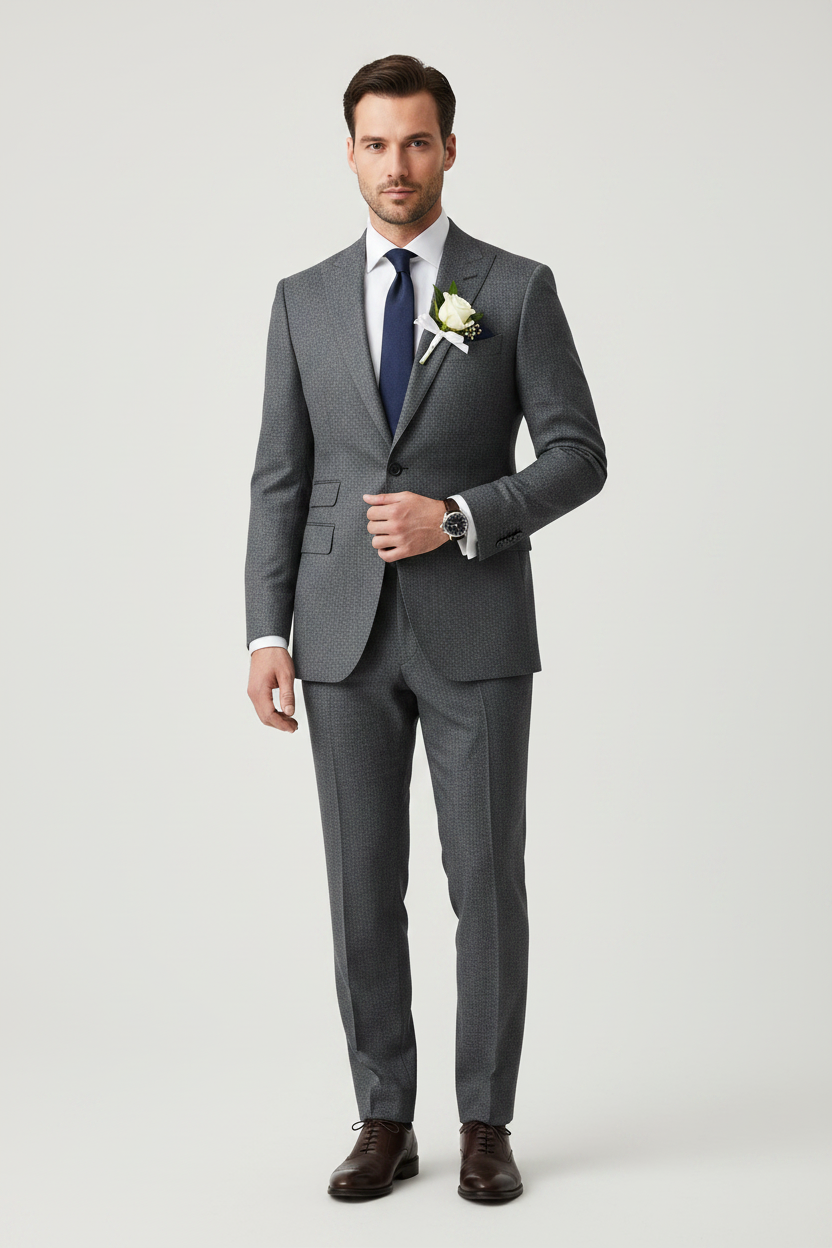

Winter suit: for what occasions?
For work: A wool or flannel suit in sober tones is perfectly suited to everyday professional life.
For a winter wedding: 3-piece suits and thicker materials are to be preferred. Deep colors enhance the elegance of the outfit.
For a formal occasion: A structured, well-fitted suit, combined with sober accessories, makes it possible to achieve an elegant outfit suitable for the event.
Mistakes to avoid with a winter suit
- Choosing a fabric that is too light
- Neglecting layering
- Wearing a coat that is unsuitable for the suit
- Opting for colors that are too summery
A winter suit should always be thought of as a cohesive ensemble.
FAQ – Men's winter suit
Wool remains the best option for its warmth, breathability, and structure.
Yes, provided that you adapt the material and thickness of the fabric to the season.
Yes, it is particularly recommended for its elegance and thermal comfort.